
Educator Expedition
Coastal Ocean Explorers: Sharks
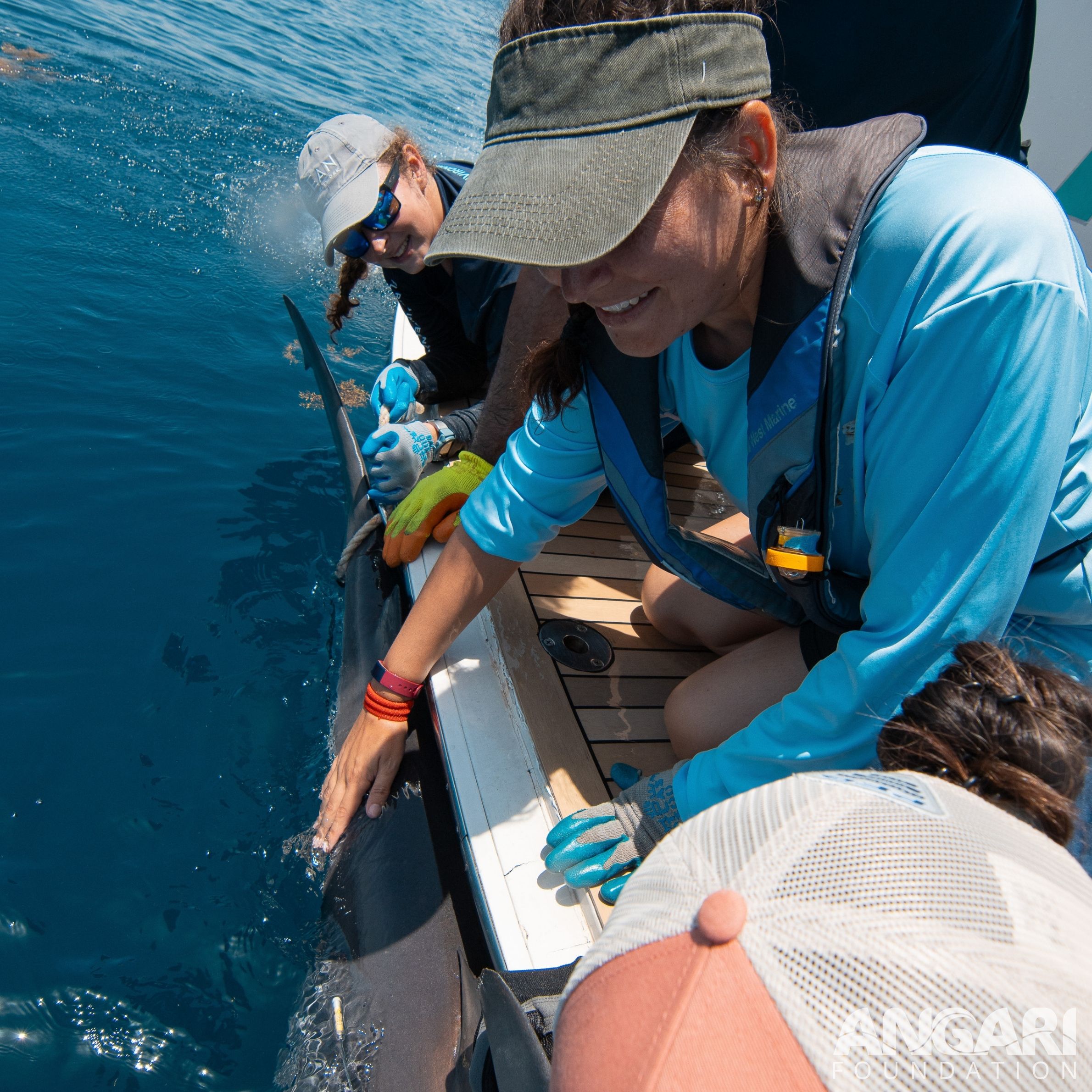
The ANGARI Foundation invites educators of Palm Beach County middle and high school students to participate in our spring educator expedition! This free program provides a hands-on and immersive opportunity to experience our Coastal Ocean Explorers: Sharks youth program. Step into the shoes of students and educators who participate in our youth shark research expeditions that take place each year alongside our partners at Florida International University. Participating educators receive experience, knowledge and resources to share with their students and colleagues, as well as hopefully leave inspired to involve students in our program!
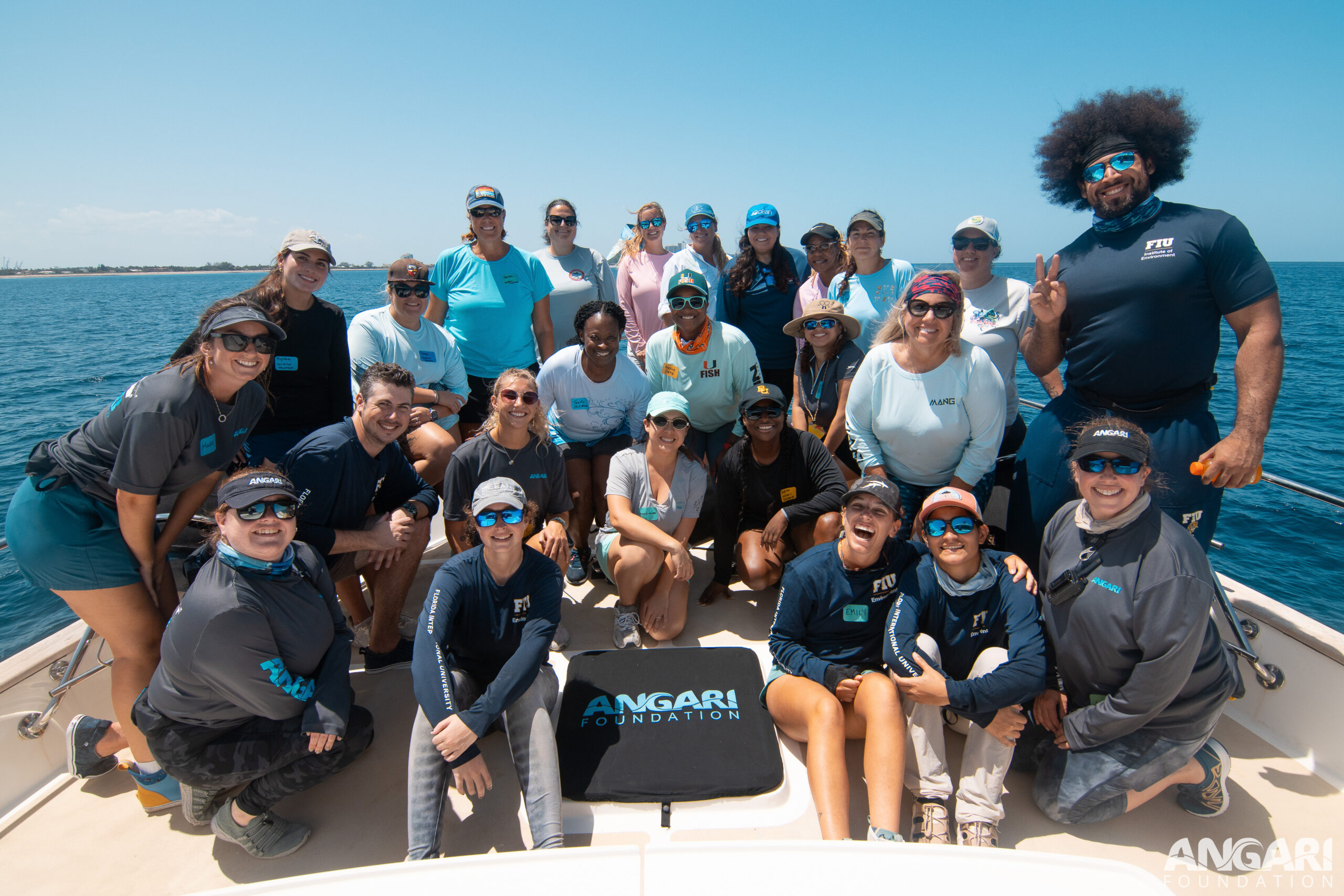
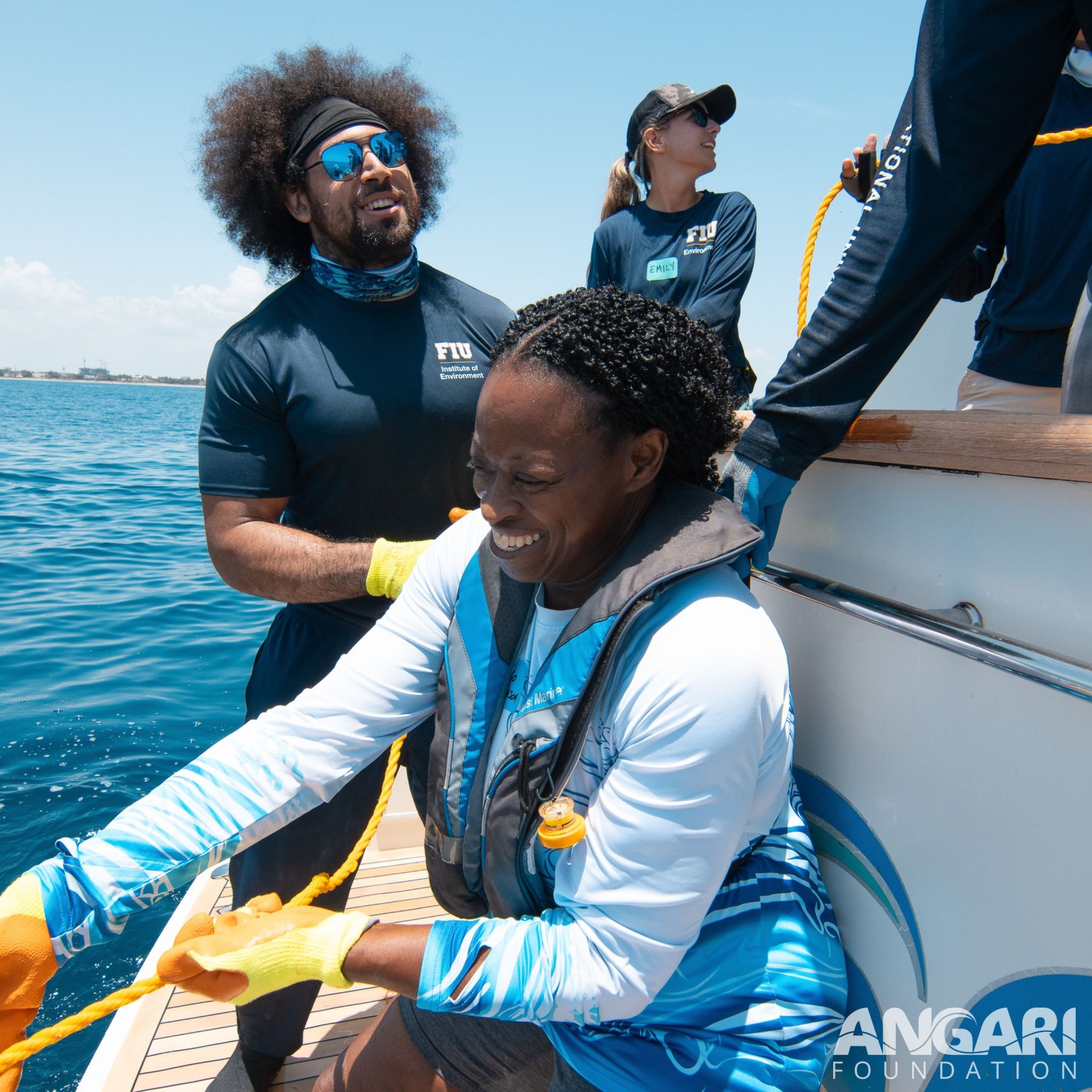
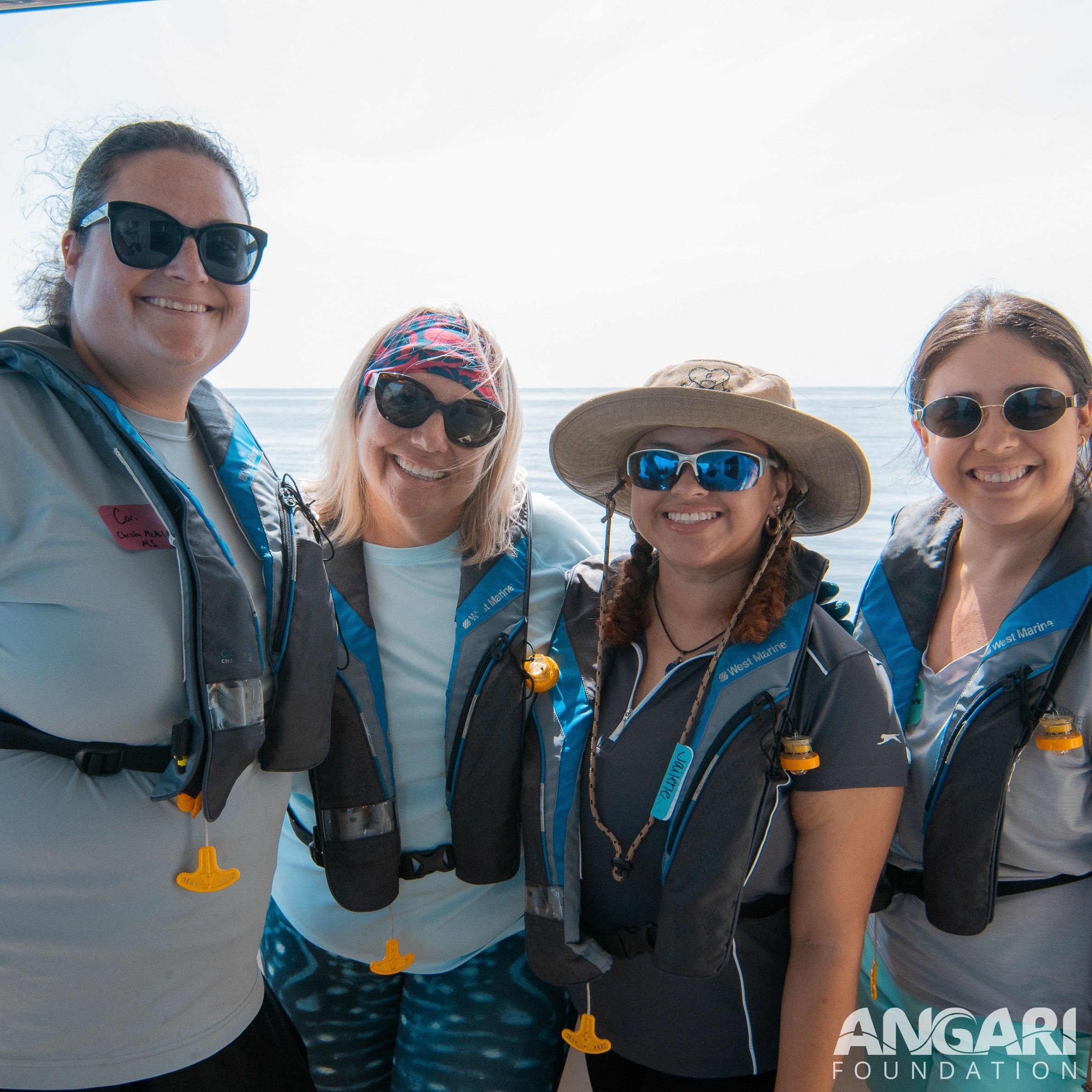
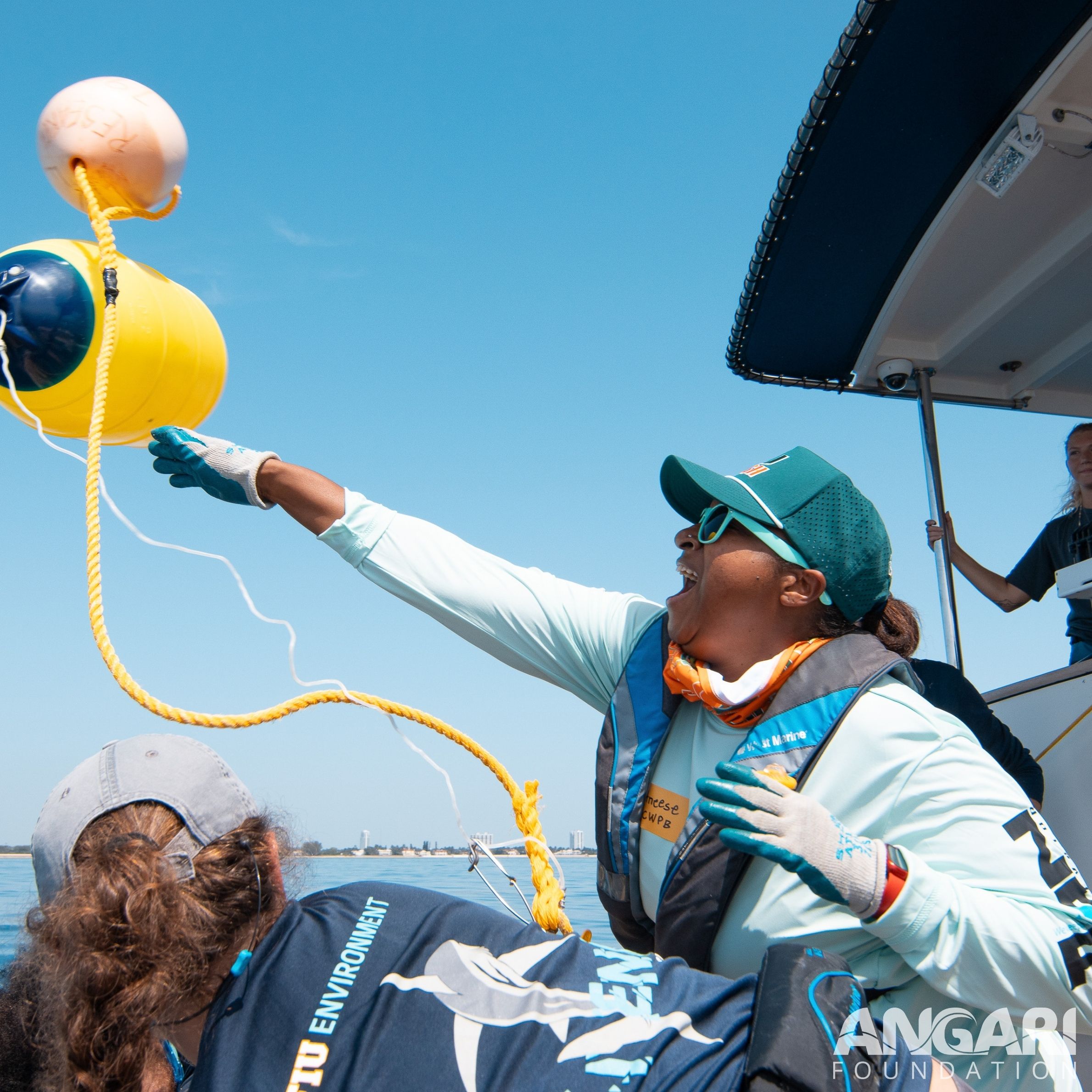
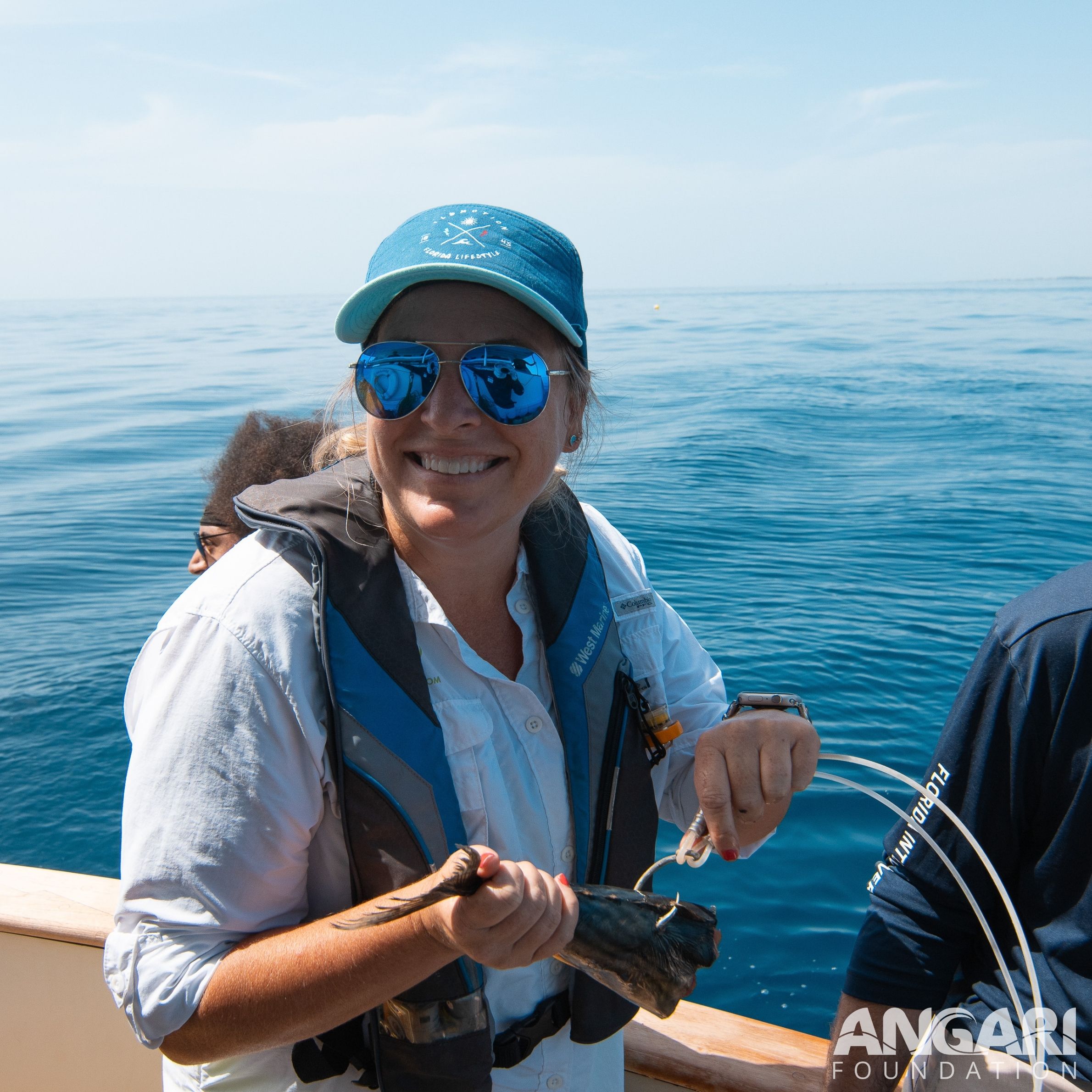
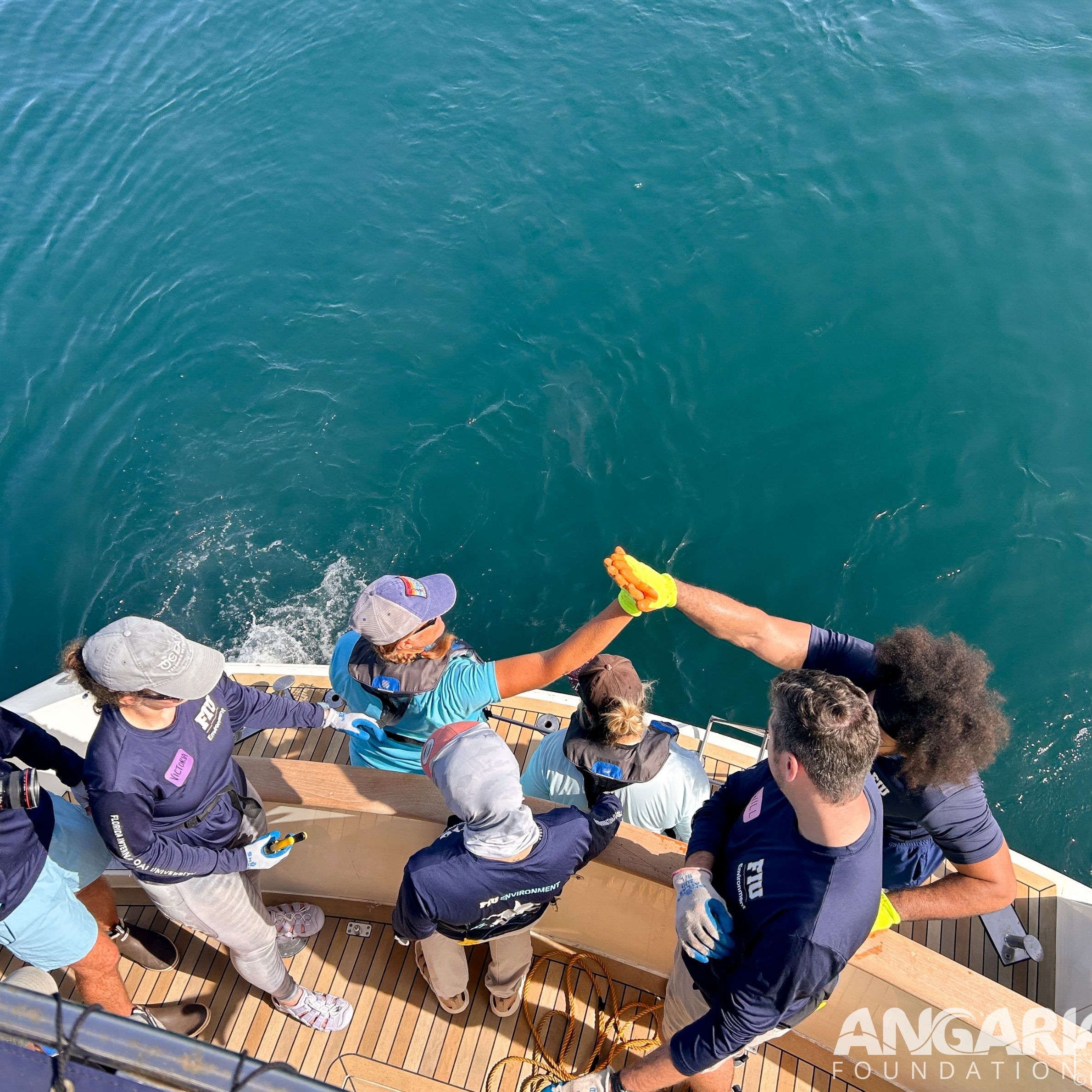
Educator Expedition Itinerary
Wednesday, March 10th, 2027
Expedition Itinerary – West Palm Beach, FL
- 07:15 – 07:30 AM: Parking & check-in.
- 07:30 – 08:00 AM: Meet the R/V ANGARI Crew and research vessel safety briefing.
- 08:00 – 08:30 AM: Introduction to Coastal Ocean Explorers: Sharks program, partner Florida International University scientists and program Lead Scientist, Emily Spurgeon.
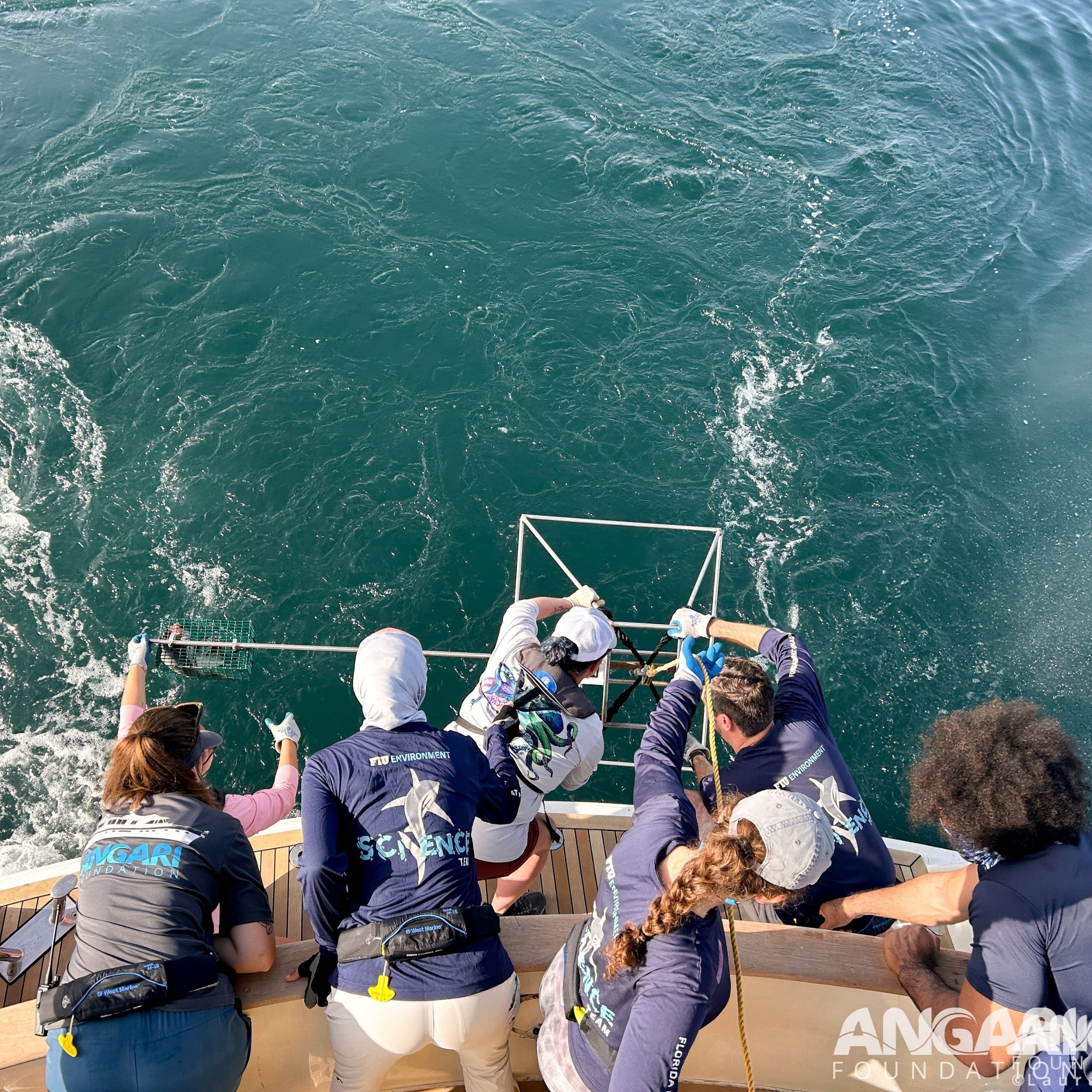
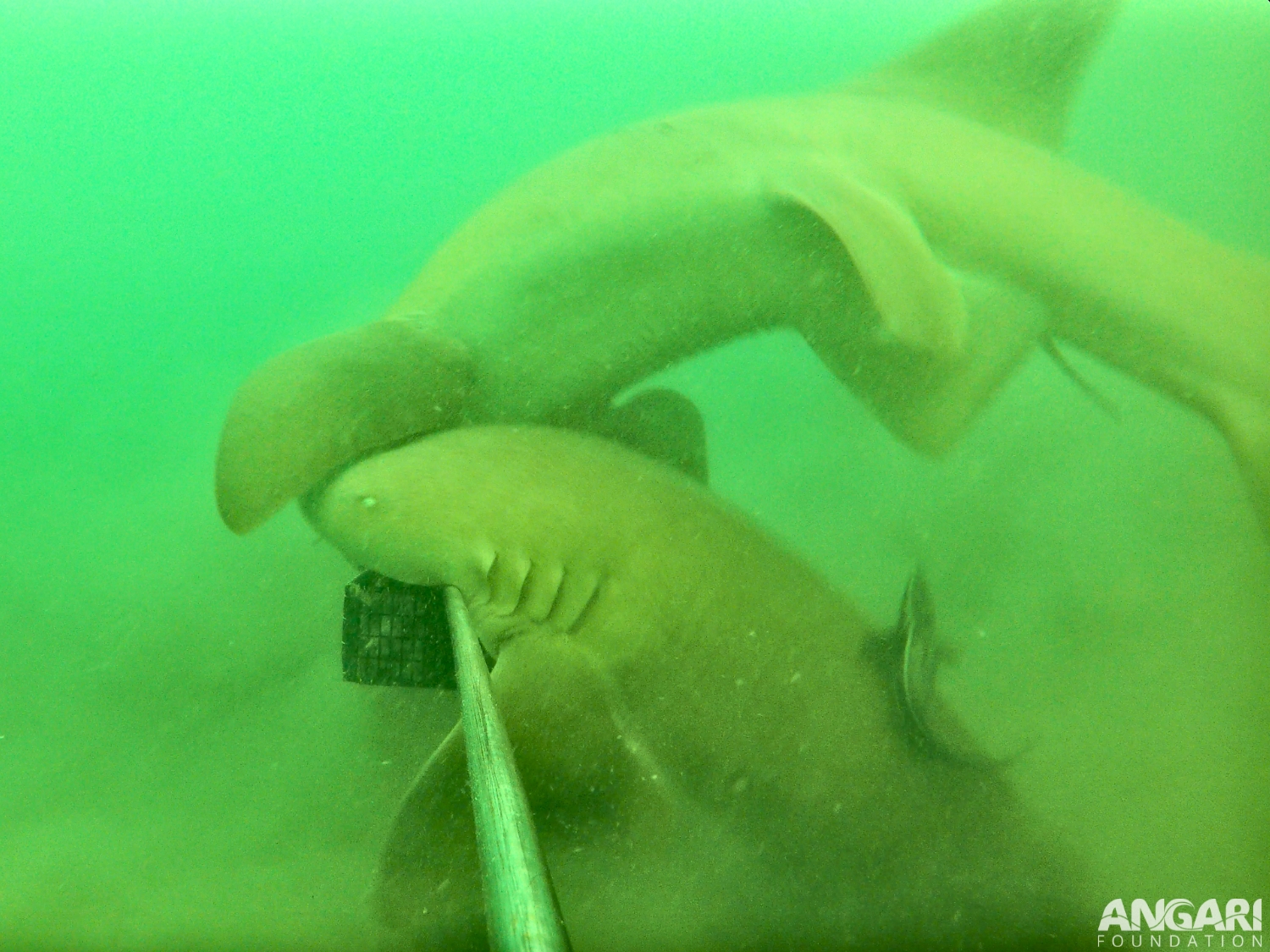
- 08:30 – 10:00 AM: Learn about and deploy baited remote underwater video systems for the study of local marine life.
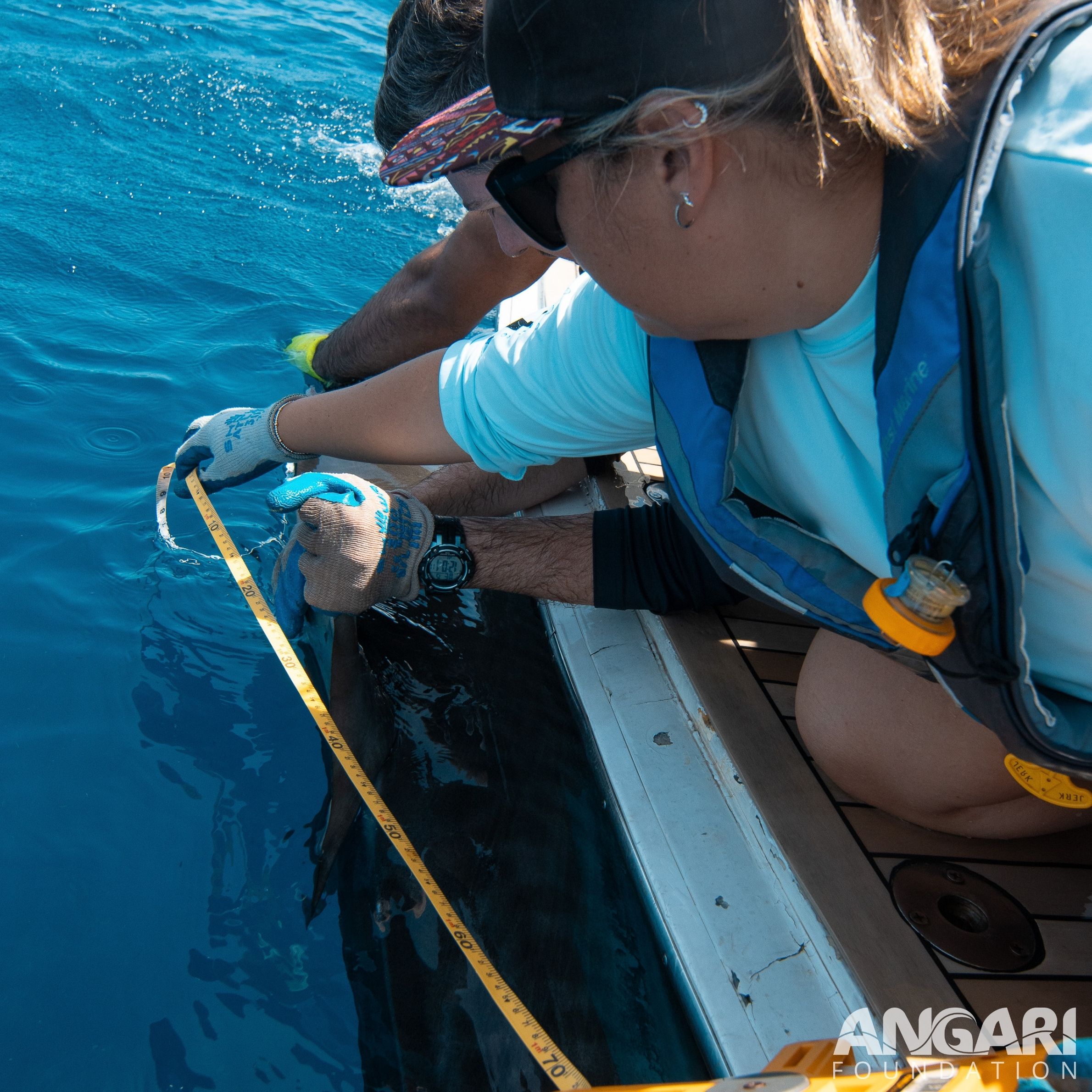
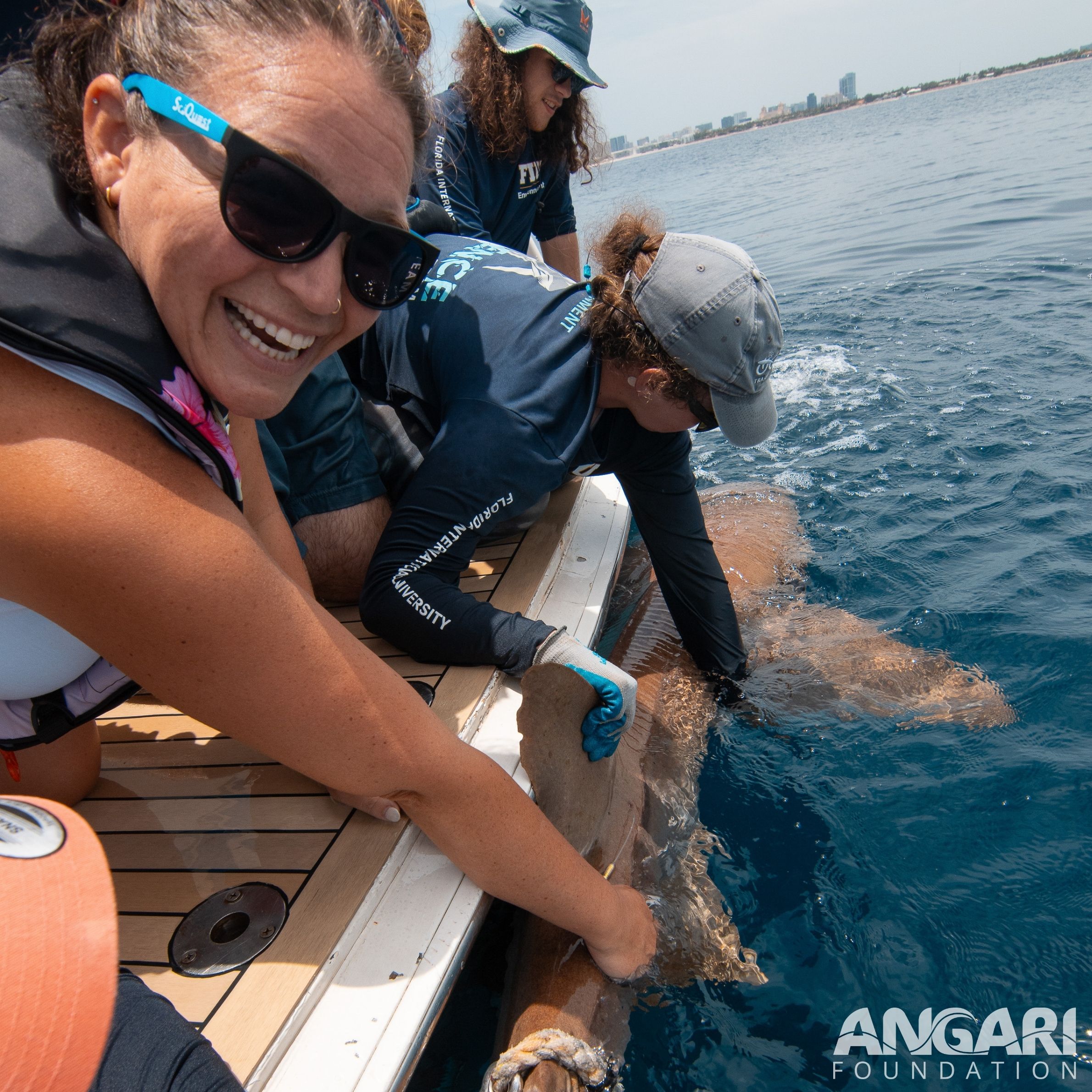
- 10:00 – 03:30 PM: Drumline fishing for sharks with scientific workup of any caught prior to release.
- 03:30 – 04:30 PM: Shark research expedition debrief and sharing of relevant educational content and resources.
- [VOLUNTARY] 04:30 – 06:00 PM: Happy hour onsite.



Educator Expedition FAQs
Topics addressed during the expeditions are varied and range from the nature of science and practice of science, to marine biology, biodiversity, food web dynamics, bio-accumulation, human impacts on the environment and fisheries. The instructional method is informal, flexible and hands-on. Students will work alongside scientists to apply and advance their own science knowledge and skills in the field. Next Generation Sunshine State Standards targeted during expeditions may include:
- SC.6.N.1.5: Recognize that science involves creativity, not just in designing experiments, but also in creating explanations that fit evidence.
- SC.7.N.1.5: Describe the methods used in the pursuit of a scientific explanation as seen in different fields of science such as biology, geology and physics.
- SC.8.N.4.1: Explain that science is one of the processes that can be used to inform decision making at the community, state, national and international levels.
- SC.8.N.4.2: Explain how political, social, and economic concerns can affect science, and vice versa.
- SC.912.N.1.1: Define a problem based on a specific body of knowledge; pose questions, conduct systematic observations, examine books and other sources of information to see what is already known, review what is known in light of empirical evidence, plan investigations…
- SC.912.N.1.7: Recognize the role of creativity in constructing scientific questions, methods and explanations.
- SC.912.L.12.1: Discuss the characteristics of populations, such as number of individuals, age structure, density and pattern of distribution.
- SC.912.L.17.8: Recognize the consequences of the losses of biodiversity due to catastrophic events, climate changes, human activity, and the introduction of invasive, non-native species.
- SC.912.L.17.20: Predict the impact of individuals on environmental systems and examine how human lifestyles affect sustainability.
Within the Ocean Literacy Framework, the following Principles and Fundamental Concepts will be addressed:
- Principle #5 – The ocean supports a great diversity of life and ecosystems.
d. Ocean biology provides many unique examples of life cycles, adaptations and important relationships among organisms (symbiosis, predator-prey dynamics, and energy transfer) that do not occur on land.
e. The ocean provides a vast living space with diverse and unique ecosystems from the surface through the water column and down to, and below, the seafloor. Most of the living space on Earth is in the ocean.
f. Ocean ecosystems are defined by environmental factors and the community of organisms living there. Ocean life is not evenly distributed through time or space due to differences in abiotic factors such as oxygen, salinity, temperature, pH, light, nutrients, pressure, substrate and circulation. A few regions of the ocean support the most abundant life on Earth, while most of the ocean does not support much life. - Principle #6 – The ocean and humans are inextricably interconnected) will be addressed during Coastal Ocean Explorers programming.
b. The ocean provides foods, medicines, and mineral and energy resources. It supports jobs and national economies, serves as a highway for transportation of goods and people, and plays a role in national security.
c. The ocean is a source of inspiration, recreation, rejuvenation and discovery. It is also an important element in the heritage of many cultures.
d. Humans affect the ocean in a variety of ways. Laws, regulations and resource management affect what is taken out and put into the ocean. Human development and activity leads to pollution (point source, non-point source, and noise pollution), changes to ocean chemistry (ocean acidification) and physical modifications (changes to beaches, shores and rivers). In addition, humans have removed most of the large vertebrates from the ocean.
g. Everyone is responsible for caring for the ocean. The ocean sustains life on Earth and humans must live in ways that sustain the ocean. Individual and collective actions are needed to effectively manage ocean resources for all.
Yes! While the focus of this program is to engage educators working in Palm Beach County, educators from any school or organization may apply. Please note, however, that we cannot support travel or transportation expenses.
We recommend that anyone subject to motion sickness or concerned about seasickness speak with their physician to acquire the appropriate over the counter or prescription medicine ahead of the expedition. Whenever wave conditions are determined to be uncomfortable for shark research offshore, the expedition takes place in the protected waters of the Lake Worth Lagoon.
If your application is accepted for the expedition, you will need to sign off on our R/V ANGARI Expedition Code of Conduct, Appearance and Liability Releases. Failure to submit completed forms by the stated deadline may result in forfeit of the expedition.
- Hat, sunglasses, sunscreen, etc. to protect you from the sun
- Reusable water bottle
- Rubber soled, closed toe shoes you do not mind getting wet or dirty
- Clothing you do not mind getting wet or dirty, including a sweater, windbreaker and/or raincoat
- Hair tie or other accessory to secure longer hair
- Small bag or backpack for all your gear
- Any medications you may need
In cases of severe weather or sea conditions that make it unsafe to conduct research offshore, the expedition will continue inshore using the same hands-on research methods within Lake Worth Lagoon. The offshore-inshore decision will be made day of by the Captain based on current weather and safe operating conditions.
Expeditions will only be cancelled when both the ocean and the Lake Worth Lagoon waters become too rough to allow a safe and effective trip. In this case, the program coordinator will notify participants of the cancellation. In certain cases, an expedition may be delayed or end early due to developing unsafe weather conditions, and these calls will be made day of as necessary for safety. There will be no rescheduling in the event of an expedition that is cut short due to weather.